Reference Library
Give every idea somewhere to belong.
Keep world rules, history, research, images, notes, links, and unruly fragments together, then connect the facts that matter to the scenes where the audience learns them.
Not every good idea needs to become a scene. None of them need to get lost.
A home for every kind of thinking
Keep the material behind the story close to the story itself.
Use the format that fits the idea in front of you. The Library stays flexible while giving important facts a path into the Plan.
01
Worldbuilding
Cultures, organizations, technologies, beliefs, laws, objects, species, customs, and the rules that hold them together.
02
Whiteboards
Open visual spaces for mood boards, relationship maps, thematic clusters, images, and ideas that resist tidy lists.
03
Notes
Free-form pages for research, questions, fragments, longer reference material, and possibilities you are not ready to settle.
04
Reference timelines
Historical and contextual events placed relative to one another, whether or not they appear directly as scenes.
05
Index cards
Flexible, searchable boards of titled cards with notes, images, and categories for sorting a body of research or ideas.
06
Attachments & links
Supporting documents and useful web links saved alongside the project, organized into categories and ready to preview.
Build a world that keeps its promises
Separate what’s interesting from what’s true.
Develop the parts of the world that deserve their own record, identify the truths and limits the story shouldn’t contradict.
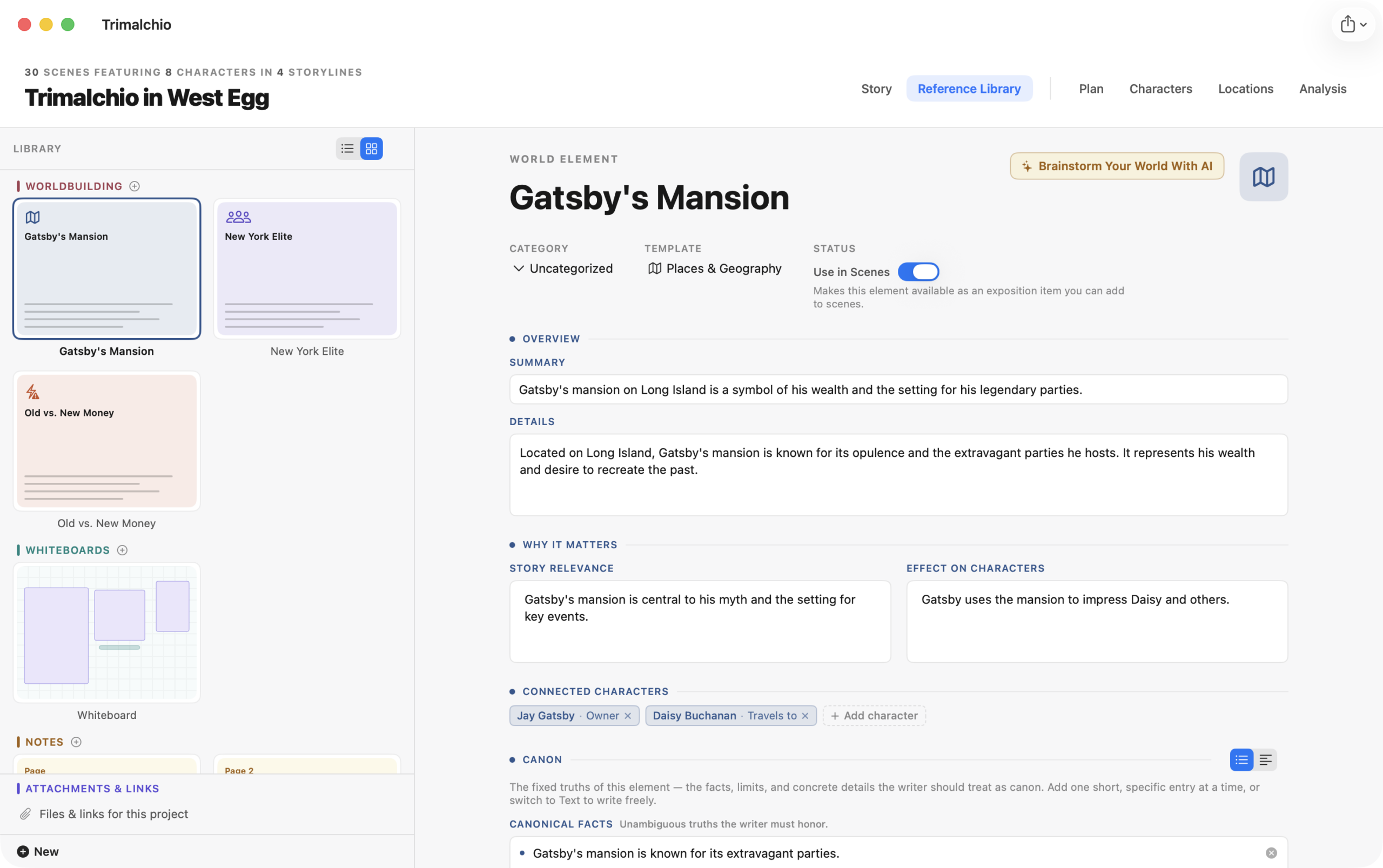
Develop only as much world as the story needs—while keeping its important rules clear.
Some ideas need space
Think visually before the idea becomes orderly.
Arrange text and images on open whiteboards. Move, resize, and layer material until the relationship becomes visible—without forcing discovery into a database too soon.
- Build mood boards and visual research collections
- Map relationships, themes, factions, or competing ideas
- Upload images or add them from a web address
- Keep exploratory material beside the structured story bible
Connect reference to the story
Decide not only what’s true, but when the audience learns it.
World elements, historical events, and index cards can become Plan exposition elements, turning background material into a deliberate reveal.
The Library preserves everything behind the story. The Plan controls what reaches the audience.
Keep discovery and continuity in the same project.
Explore freely, establish canon when it matters, and reveal information deliberately.
Learn the details
Keep the world behind the words
Save all the sparks.
Know which matter.
Give all your research, worldbuilding, images, and stray ideas a home.